use cases
Keep context between agent sessions, teammates and tools
Where a coding agent loses what you already decided — and what kadence does about it. Every screenshot is real output from kadence’s own journal.
01 · A rejected idea
A new session re‑proposes what you rejected
Monday you ruled it out. After a /clear, Wednesday’s session suggests it again.
- 1You ask for something you ruled outWhile you work, your agent records the choice — with the reason and the option that lost.
$ kadence decision add "…" --why "…" --rejected "…" - 2The hook finds the decisionLater, a prompt proposes the rejected idea. The prompt hook searches the journal on the way in.
- 3Your agent answers from itThe decision arrives beside the prompt, before the agent answers. Nobody pastes anything.
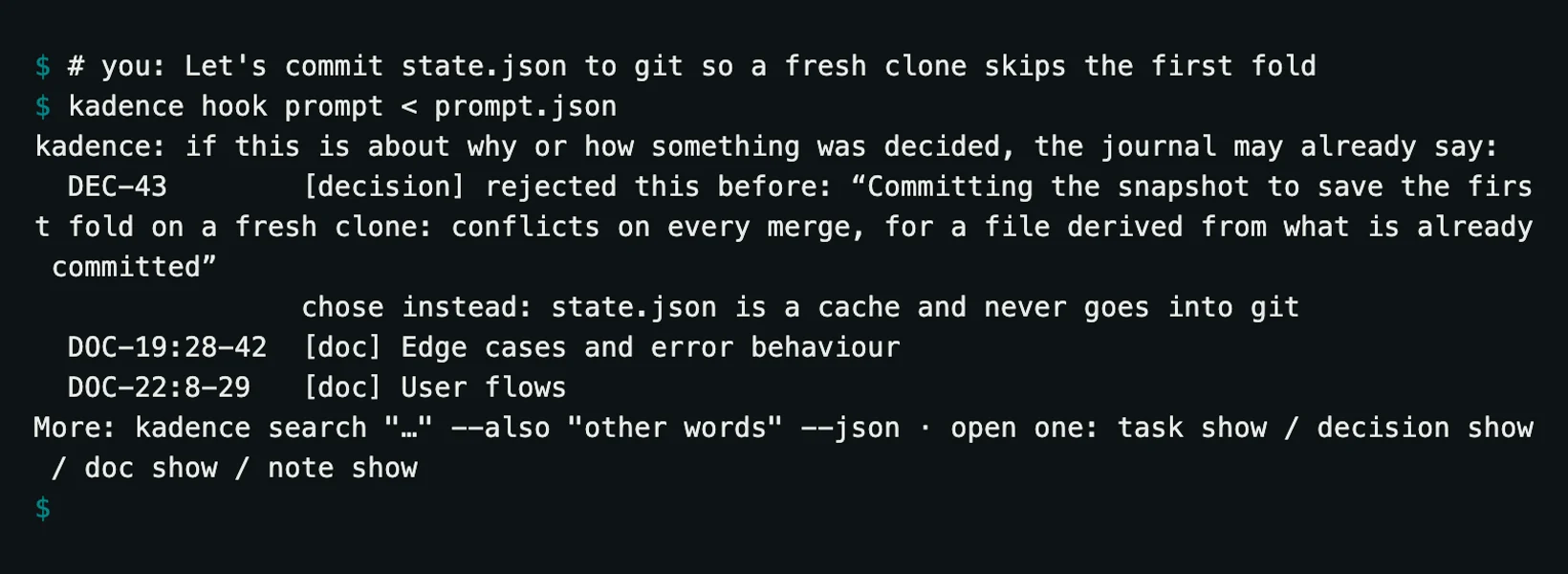
On kadence’s own journal, 8 of 10 prompts like this got the right decision back, with no false alarms on ordinary prompts.
02 · A teammate
Your teammate’s agent doesn’t know what yours decided
Agent memory stays on the machine that made it. A fresh clone gets the code, not the reasons.
- 1Your agent records a decisionIt lands as a small file in .kadence/, next to your code.
- 2You push; they pullThe decision travels with the branch and shows up in the pull request.
$ git pull - 3Their session starts with itA hook runs prime when their session opens: the decisions in force come first.
$ kadence prime
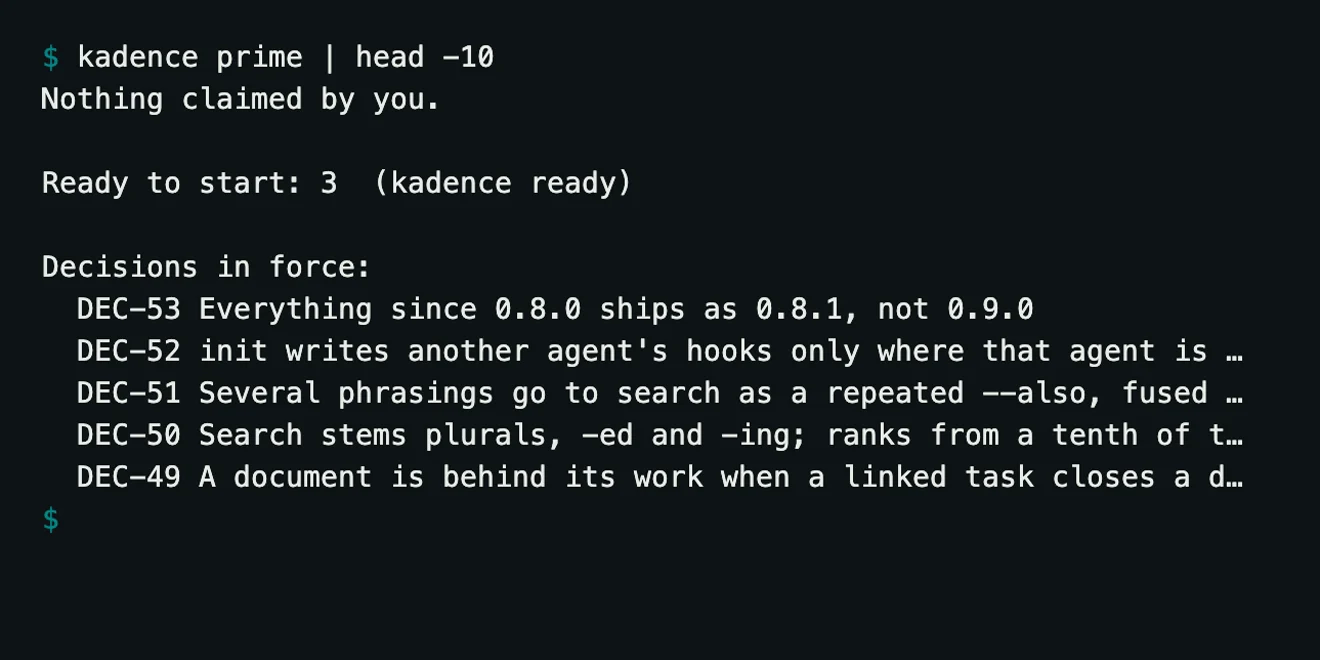
Your teammate’s agent starts where yours stopped.
03 · After a break
You come back after a week
What’s in flight, who took what, and why is it like this?
- 1Open the boardThe same journal, as a board in your terminal.
$ kadence ui - 2See what’s ready and claimedReady, in progress, in review — and who has what.
$ kadence ready - 3Ask why, get the decisionA question in plain words returns the decision with its reason.
$ kadence search "why …"
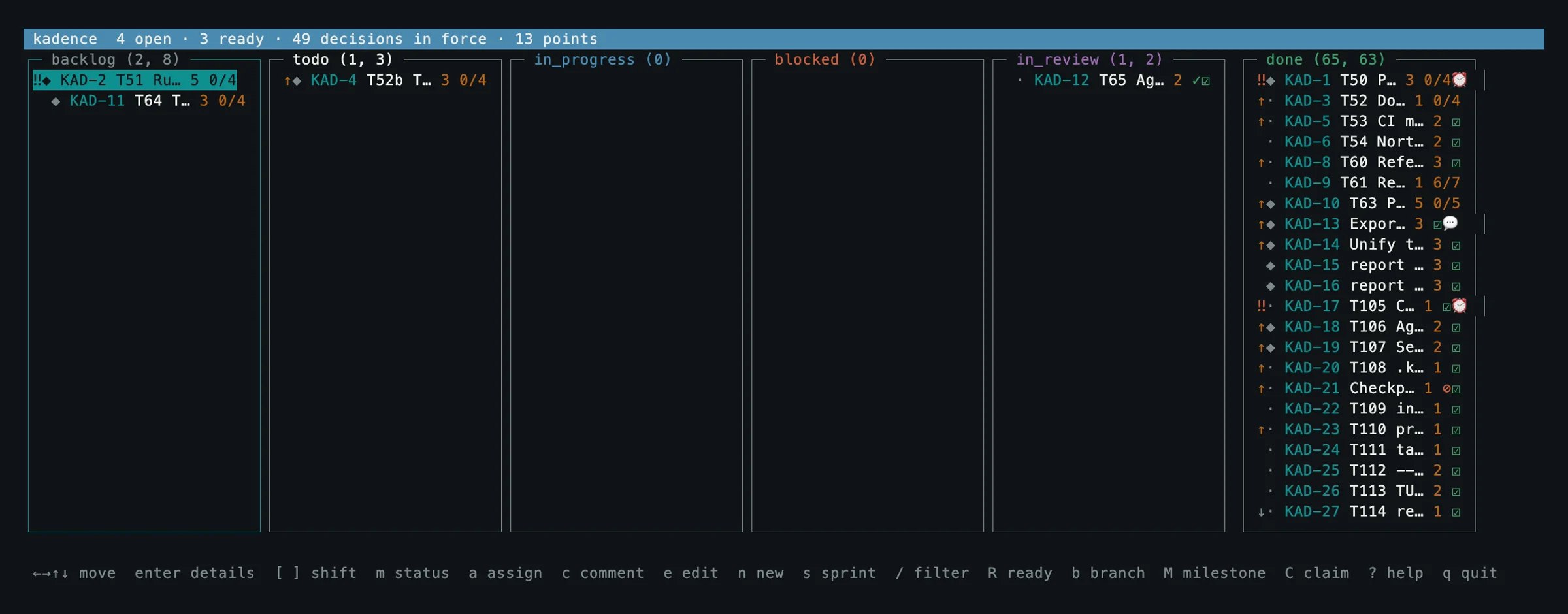
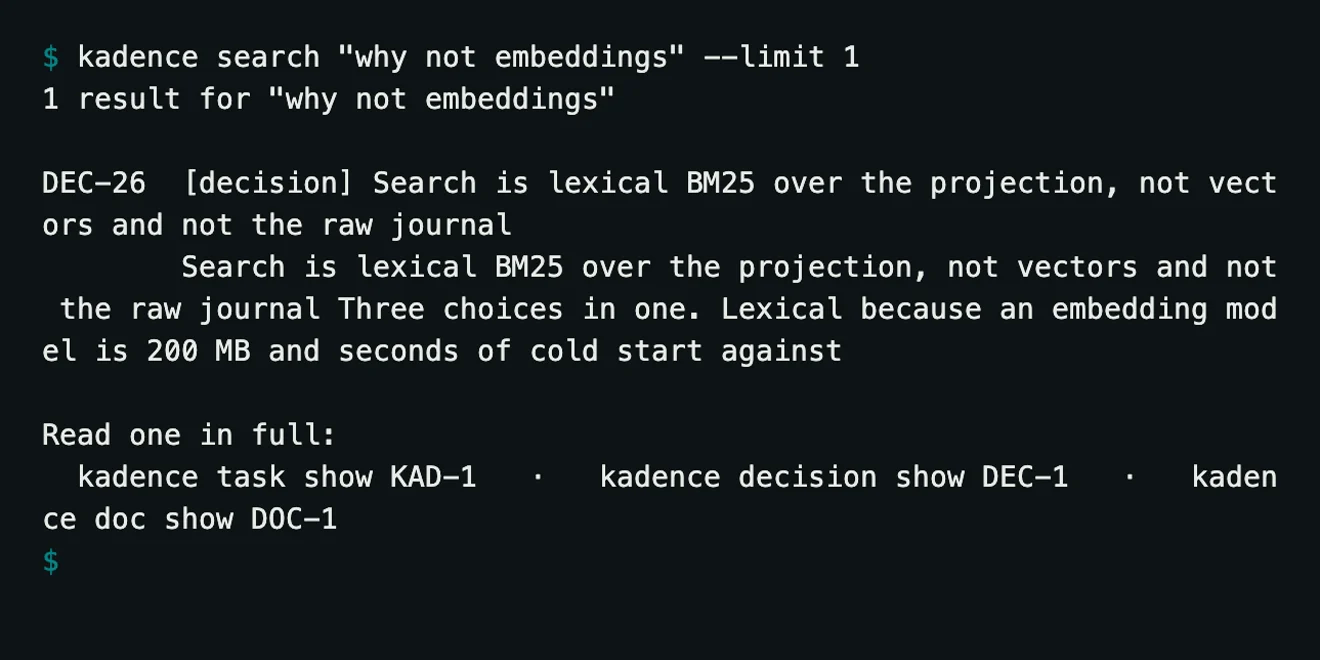
No rebuilding the week from commits and chat logs.
04 · Several agents
You switch between Claude Code, Codex and Cursor
Each tool keeps its own memory, and none of them reads the others’.
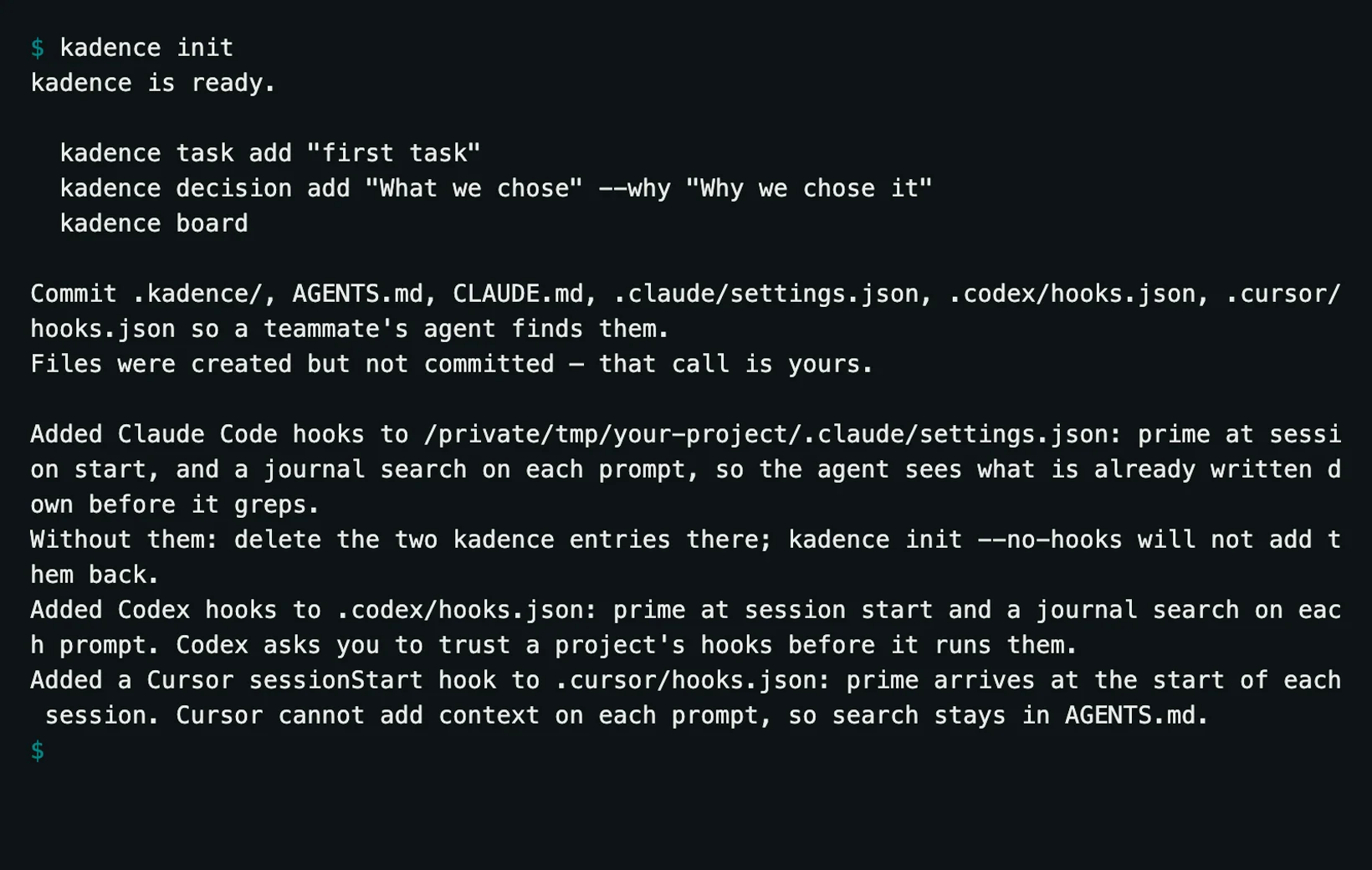
- 1Run init onceIn the repository, once. It writes the agent instructions into AGENTS.md and CLAUDE.md.
$ kadence init - 2Hooks for each tool you useClaude Code, Codex, Cursor and Copilot — where it finds them in use.
- 3One record for all of themEvery agent reads and writes the same journal.
The decision a Claude session made is there when Codex opens the repository.